

If you are wondering how to get home-delivered meals through Medicaid, the most helpful thing to know is that it is a team process. The member and their caregiver share what they need. A service coordinator or case manager guides the request. The member's health plan or program reviews it and decides whether to authorize it. If it is authorized, a meal provider prepares and delivers the meals. Exact steps vary by state and program, and the program can explain which roles apply to your request.
Why meals can be part of Medicaid support at home
Many states offer Medicaid home and community-based services, often through programs called waivers. According to Medicaid.gov, these programs help people who prefer to get long-term services and supports at home or in their community.
Home-delivered meals can be one of the services in some of these programs, when authorized. For example, the Medicaid.gov waiver factsheet for Pennsylvania lists "home delivered meals" among the services in the PA Community HealthChoices Waiver. Other states and programs have their own rules.
The roles, one by one
The member
The member is the person who would receive the meals. Their needs, preferences and goals come first. They, or someone they trust, share what would help them stay at home.
The caregiver
A family member or friend often helps the member gather information, make calls and keep track of next steps. Caregivers can be a big help, especially when the member prefers support with paperwork or phone calls.
The service coordinator or case manager
This person guides the request. In Pennsylvania's Community HealthChoices program, the Department of Human Services says every participant receiving long-term services and supports picks a service coordinator, who coordinates services and helps develop a person-centered service plan. Other programs may use the title case manager.
The health plan or program
The health plan or program reviews the request and decides whether to authorize the service. Authorization rules depend on the state and program.
The meal provider
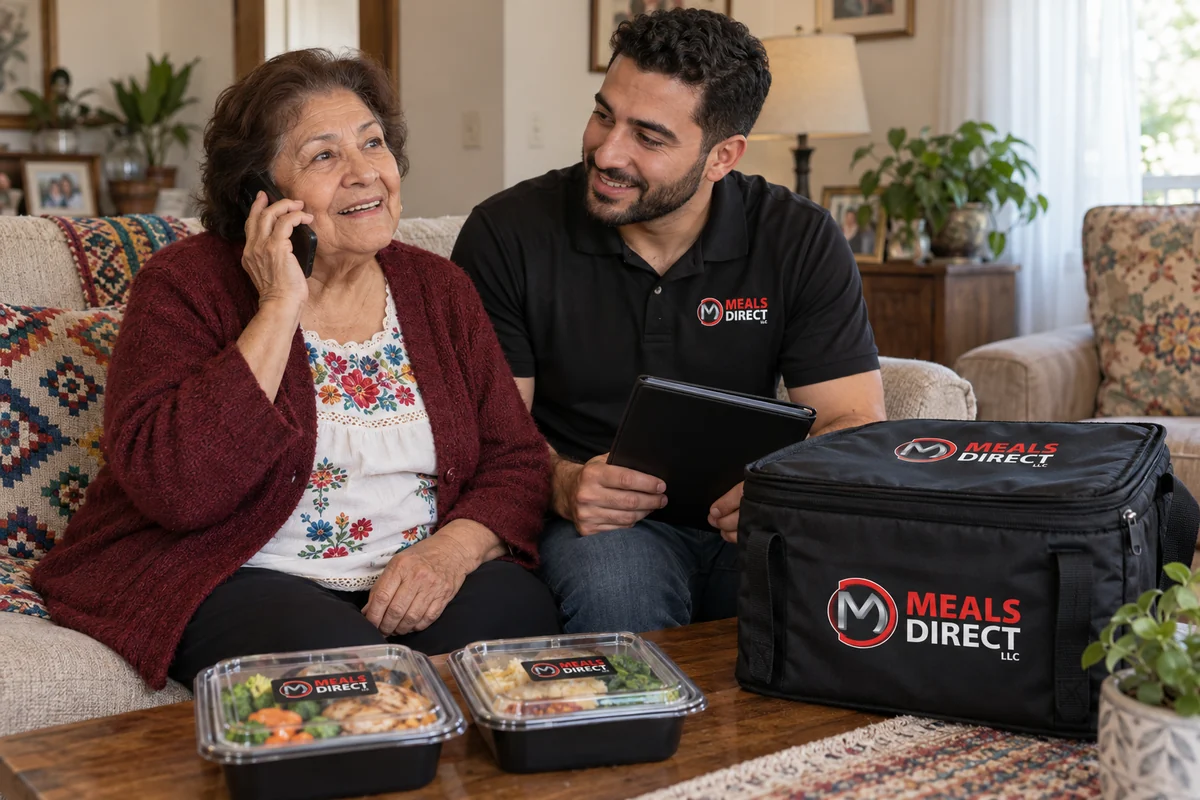
Once meals are authorized, a meal provider such as Meals Direct prepares and delivers them, following what was authorized and the member's preferences where possible.
How to get home-delivered meals through Medicaid: how a request usually moves
Every program is different, but a request often moves like this:
- The member or caregiver raises the idea. They might ask: "Can home-delivered meals be part of my service plan?"
- The service coordinator or case manager looks at the member's needs and what their program covers.
- If meals fit the plan, a request goes to the health plan or program, which reviews it.
- If the service is authorized, a meal provider is arranged. The provider confirms the service area and starts the details.
- Everyone follows up when needs, addresses or plans change.
Asking is only a first step. Ask what any form or request does before submitting it. Approval depends on the program.
A fictional example
This example is fictional. It does not describe a real person or a real case.
An older adult lives alone and has started to find cooking hard. Her son helps her with errands. At a regular check-in, she mentions to her service coordinator that she would like help with meals. The coordinator explains the options in her program and writes down her food preferences, including a cuisine she grew up with. The coordinator then sends a request through the program's process. Once the service is authorized, the coordinator connects with a meal provider that serves her area. The provider's intake team confirms the delivery details with her and her son. A few months later, when her needs change, the coordinator updates the plan.
In real life, the steps and who does what can look different. That is why it helps to ask the member's program and coordinator what applies.

What varies by state and program
Many details depend on where the member lives and which program covers them:
- Who the member's coordinator is, and what title they use
- Which services are covered and how authorization works
- Which meal providers serve the member's area
- Which menus and meal formats are available on their route
Meals Direct serves eligible members in Pennsylvania, New Jersey and New York. Options vary by area and program.
The first step to take
If you are a member or caregiver, the simplest first step is to ask the member's service coordinator or case manager about meals. If you are not sure who that is, the member's program or health plan can tell you.
You can also start with our locations page to find the Meals Direct team for the member's state. Have a few details ready: the member's ZIP code, their program or plan if you know it and whether meals are already approved, if you know.
Please keep health details, ID numbers and case information out of social media comments and messages. For anything personal, call or email us, or use Request a call.
