
In plain language, "waiver-approved" can refer to program enrollment or an approved service, so it is worth asking what the speaker means. Enrollment in a program and authorization of a particular meal benefit are separate things to confirm. In Pennsylvania, home-delivered meals can be one of the services a person receives at home when their program authorizes them. This guide explains the basics, Pennsylvania's long-term living programs and how authorization generally works.
This is general information, not eligibility advice. Your service coordinator or the program itself can tell you what applies to you.
Waiver basics
Many states offer Medicaid home and community-based services. According to Medicaid.gov, states can create home and community-based services waivers "to meet the needs of people who prefer to get long-term care services and supports in their home or community, rather than in an institutional setting."
Why the word waiver? Medicaid.gov explains that, under these programs, states can waive certain Medicaid program requirements. That is why the programs are often called waivers. The phrase alone does not tell you which services a particular person has been authorized to receive.
Each state designs its own waivers, so who is eligible and which services are covered differ from state to state.
Pennsylvania's long-term living programs
In Pennsylvania, the Department of Human Services' Office of Long-Term Living (OLTL) runs the main programs for older adults and adults with physical disabilities. According to the Department of Human Services, OLTL administers:
- Community HealthChoices (CHC), a Medicaid managed care program for long-term services and supports
- Home and community-based services under the OBRA waiver
- The Act 150 Program
- LIFE (Living Independence for the Elderly), a Medicaid managed care program
Community HealthChoices
The Medicaid.gov factsheet for Pennsylvania describes the PA Community HealthChoices Waiver as serving people age 65 or older, and people age 21 to 64 with physical disabilities, who meet a nursing facility level of care. Its list of services includes "home delivered meals," along with many others, such as personal assistance services and home adaptations.
The Department of Human Services says that every CHC participant receiving long-term services and supports picks a service coordinator, and that each of these participants has a person-centered service plan.
These descriptions explain public programs. They do not establish Meals Direct participation in any particular program. Confirm provider participation with the program and Meals Direct separately.
LIFE
According to the Department of Human Services, LIFE provides services and supports to help Pennsylvanians aged 55 and up live independently in their community. Eligibility includes age, care needs, financial requirements and living in an area served by a LIFE provider.
Pennsylvania waiver home-delivered meals: how authorization generally works
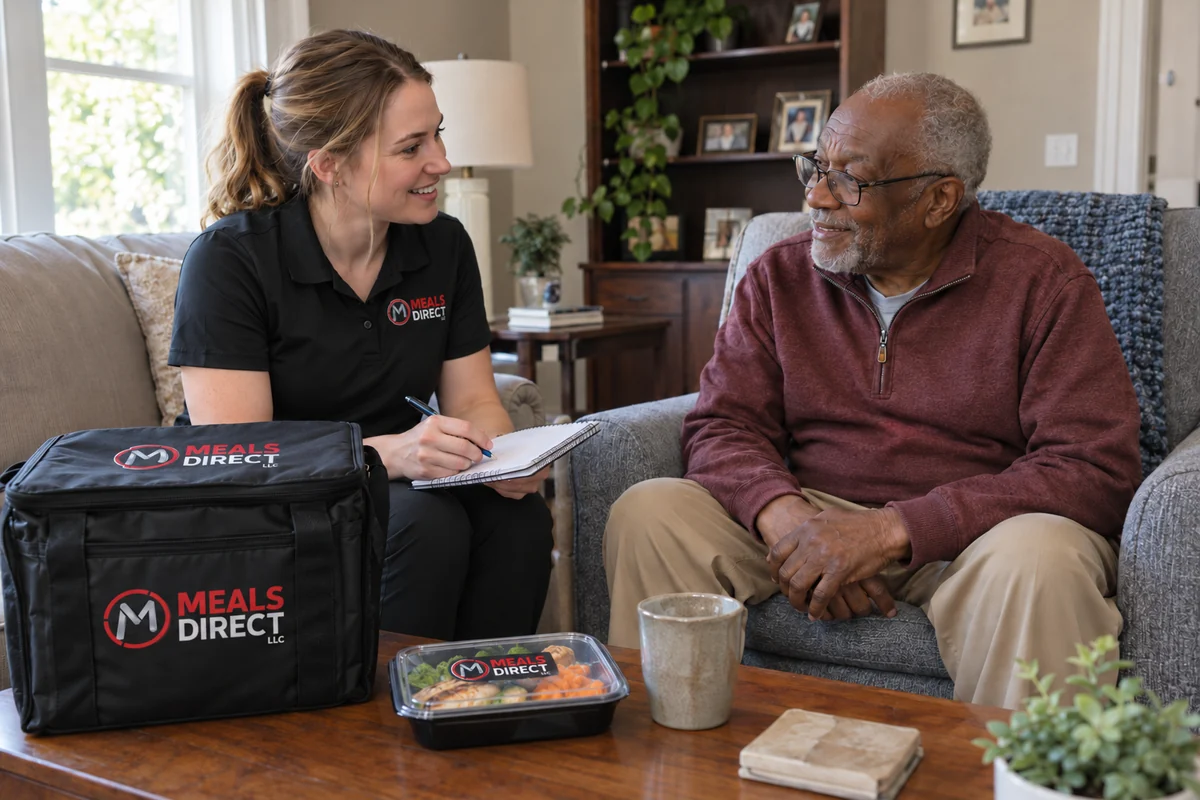
Every program has its own process, but for a person enrolled in a program like Community HealthChoices, it generally works like this:
- The person is enrolled in a program that offers home and community-based services.
- A service coordinator works with them to understand their needs and goals.
- Services are included in a person-centered service plan, based on those needs.
- The program or plan authorizes services, such as home-delivered meals, when they fit the plan.
- A provider delivers the authorized service. Ask the program which providers participate and serve the member's address.
Ask the program which of these steps is complete and whether meals are included in the current authorization. The phrase "waiver-approved" is not a substitute for that confirmation.
Some eligible members may receive authorized meal benefits at no personal cost. Coverage and authorization vary.
Who to call
- If the member already has a service coordinator, call them first. They can explain what the member's plan includes and how to ask about meals.
- If the member is not enrolled in a program yet, the Department of Human Services' Community HealthChoices page explains how to apply.
- If you want to ask Meals Direct, start with our locations page and choose Pennsylvania.
Have a few details ready: the member's ZIP code, their program if you know it and whether meals are already approved, if you know.
Please keep health details, ID numbers and case information out of social media comments and messages. For anything personal, use the phone, the Request a call form or email.

A note for Pennsylvania families
Everything in this article is about Pennsylvania. New Jersey and New York have their own programs and rules, so families in those states should start with their own state's resources and our locations page.
