
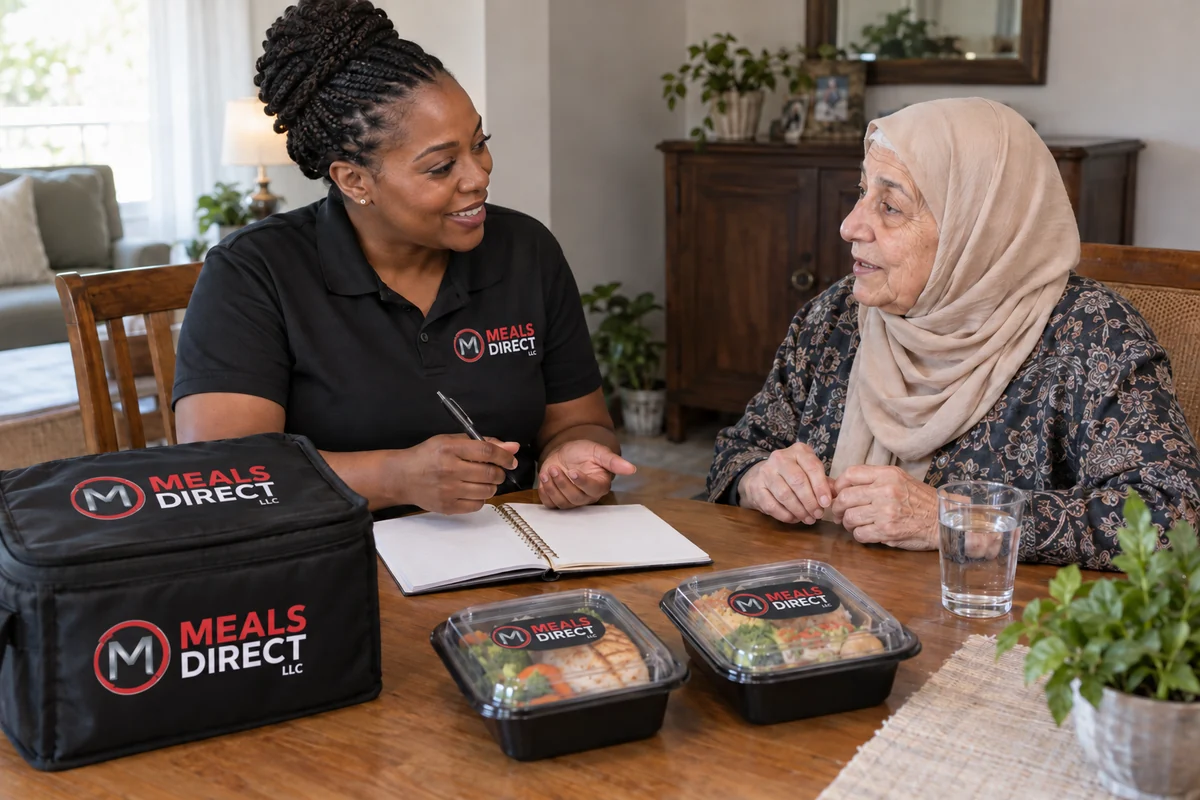
If you want to ask your service coordinator about home-delivered meals, you do not need special words. Three plain questions cover most of it: Can home-delivered meals be part of my service plan? What is needed for that to be authorized? Which meal providers serve my area? This guide explains who service coordinators are, what each question means, what to have ready and what usually happens next.
Who service coordinators and care managers are
A service coordinator, sometimes called a case manager or care manager, helps a person get and coordinate the services they need to live at home. The title depends on the program and the state.
In Pennsylvania's Community HealthChoices program, for example, the Department of Human Services says that every participant receiving long-term services and supports picks a service coordinator. The service coordinator coordinates the person's services and works with them on a person-centered service plan.
Medicaid.gov lists case management, described as supports and service coordination, among the standard services in home and community-based services waivers.
Your service coordinator is the person to ask about what your program covers and how to request a service.
How to ask your service coordinator about home-delivered meals: three questions
1. "Can home-delivered meals be part of my service plan?"
What it means: You are asking whether meals are a service your program can include, and whether they fit your needs.
Why it helps: Home-delivered meals can be one of the services in some programs, when authorized. Your coordinator can tell you whether your program includes them and whether they could fit your plan.
2. "What is needed for that to be authorized?"
What it means: You are asking about the steps between "this could fit" and "this is approved."
Why it helps: Authorization comes from your program or health plan, not from the meal provider. Your coordinator can explain what your program needs, such as an update to your service plan.
3. "Which meal providers serve my area?"
What it means: You are asking who can actually deliver to your address.
Why it helps: Providers serve different areas. Meals Direct serves eligible members in Pennsylvania, New Jersey and New York, and service areas vary within each state. You can also ask about the menus or meal formats that matter to you, such as a cuisine you grew up with or frozen meals you can heat later. Options vary by area and program.
What to have ready before the call
A little preparation makes the conversation easier:
- Your ZIP code, so the coordinator can check which providers serve your area
- Your program or plan name, if you know it
- Whether meals are already approved, if you know
- What would help you, such as help on days when cooking is hard, or meals you can store and heat later
- Food preferences, like a favorite cuisine, foods you do not eat, allergies and diet needs
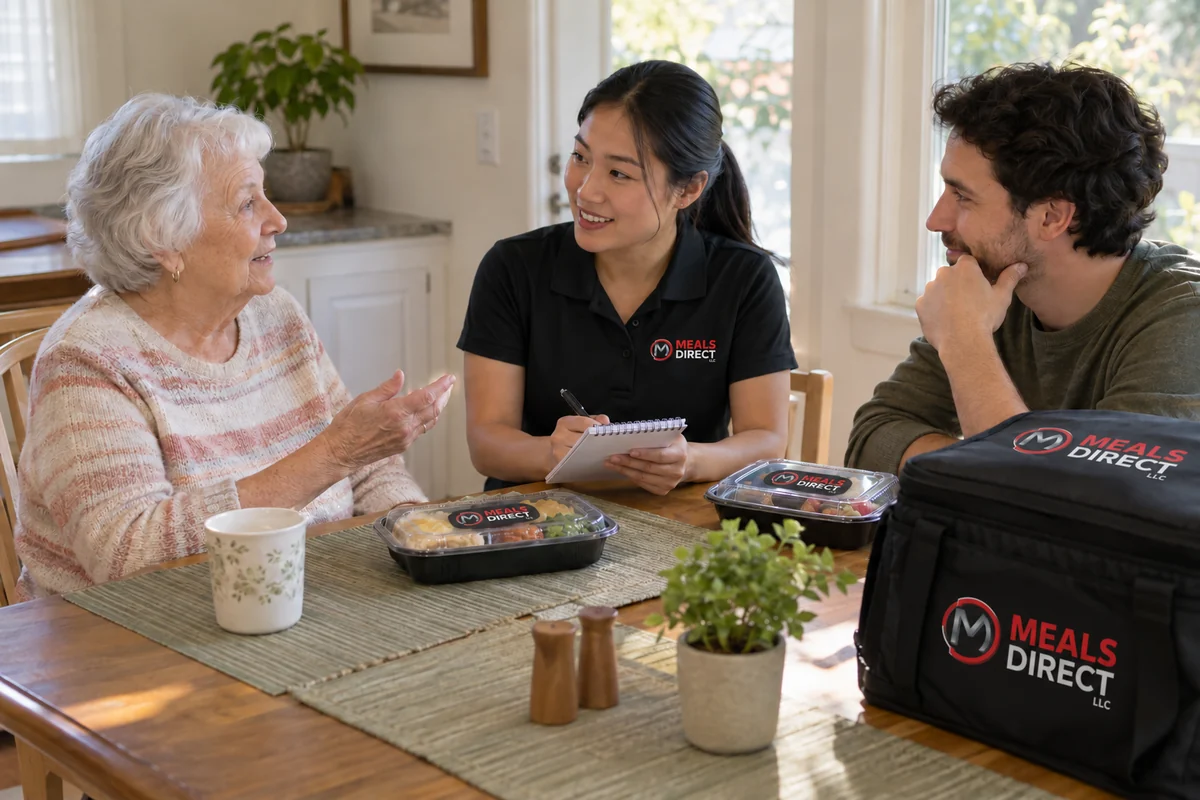
- A notebook, to write down the answers and the next step
If a family member helps you, you may want them on the call, with your permission.
Tips for the conversation
- Ask one question at a time. Write down each answer before moving on.
- Ask who will do the next step. Is it you, the coordinator or someone else?
- Repeat back what you heard. "So the next step is..." helps avoid mix-ups.
- It is okay to call back. If you think of another question later, you can ask at any time.

What happens next, in general terms
Every program is different, but after you ask, things often move like this:
- Your coordinator looks at your needs and what your program covers.
- If meals fit, a request goes through your program's process for review.
- If the service is authorized, a meal provider that serves your area is arranged.
- The provider confirms the details with you, such as delivery information and preferences.
- If your needs change later, you and your coordinator update the plan.
Asking is only a first step. Ask what any form or request does before submitting it. Approval depends on the program.
Some eligible members may receive authorized meal benefits at no personal cost. Coverage and authorization vary.
Please keep health details, ID numbers and case information out of social media comments and messages. For anything personal, use the phone, email or Request a call.
