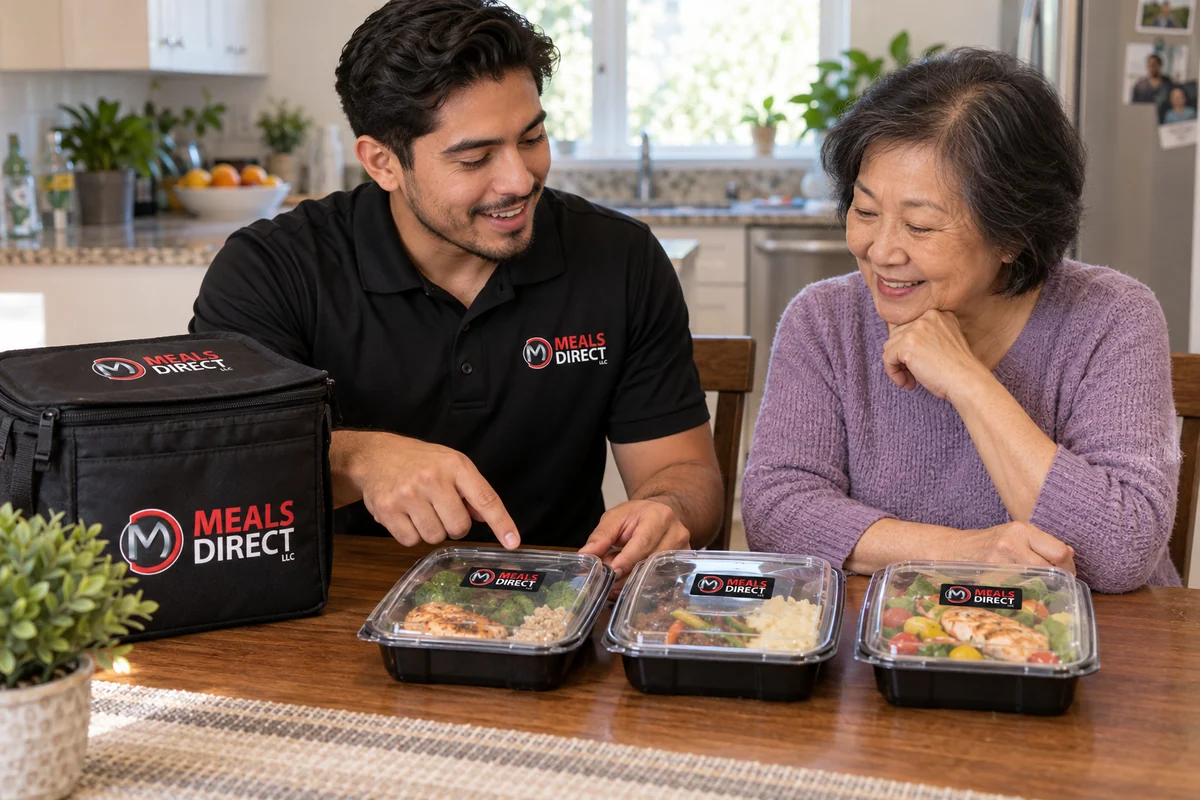
When people compare hot vs frozen home-delivered meals, the real question is usually simple: which format fits the way you or your family member eats and lives? Meals Direct offers hot, frozen and specialty fresh formats in participating locations. Which ones you can get depends on your area and program, so this guide explains each format in general and gives you good questions to ask.
What each format means
Hot meals
Hot meals are one of the three formats. Ask how a hot meal should be handled when it arrives, and whether it needs to be reheated. Do not judge whether a meal is safe to eat from the word "hot" alone.
Frozen meals
A frozen meal is stored in the freezer and heated when you want it. Frozen meals can help when someone prefers to choose when they eat, or likes to keep a few meals on hand.
Specialty fresh
Meals Direct uses the term specialty fresh for one of its meal formats. Ask the team which items this includes in your area and how each should be stored and served.
Options vary by area and program. Not every format is offered in every place.
Hot vs frozen home-delivered meals: storage and reheating
Whatever the format, two rules come first: follow the instructions on your meal's label, and keep food out of the temperature range where bacteria grow fastest.
The U.S. Department of Agriculture (USDA) calls the range between 40°F and 140°F the Danger Zone. The USDA advises never leaving perishable food out of refrigeration for more than 2 hours, or more than 1 hour if the temperature is above 90°F.
For leftovers, the USDA's leftovers and food safety guide says:
- Refrigerate leftovers within 2 hours.
- Use refrigerated leftovers within 3 to 4 days, or freeze them.
- Reheat leftovers until they reach 165°F, measured with a food thermometer.
- It is safe to reheat frozen leftovers without thawing them first. It just takes longer.
Read the meal's instructions as well as the general guidance. If directions are missing, unclear or appear to conflict with food-safety guidance, contact the team before eating the meal. Do not assume a label makes food safe after unsafe storage.
Things to think about for each format
- Hot: Is someone home to receive the meal and eat it or refrigerate it soon?
- Frozen: Is there freezer space? Is there a microwave or oven, and is it easy to use?
- Specialty fresh: Is there fridge space, and will the items be used while they are fresh?
Scheduling: what to ask
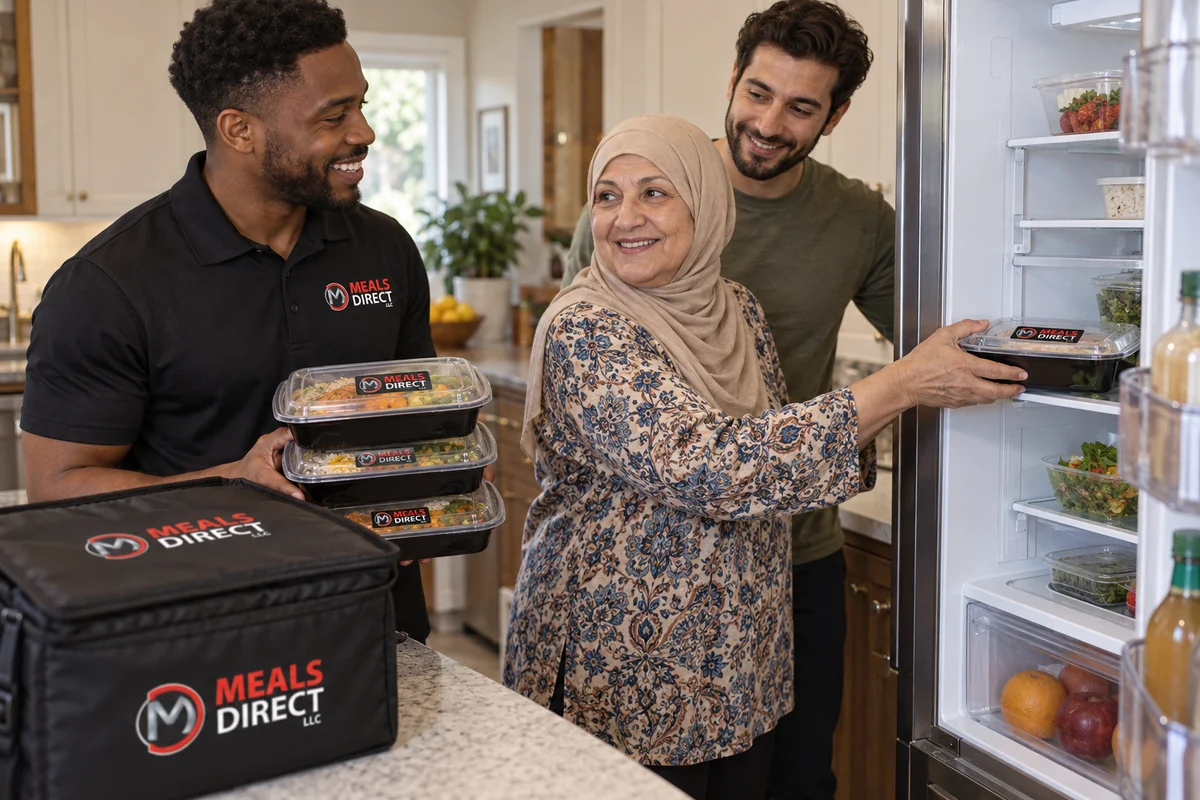
Delivery schedules vary by area and program, so it is better to ask than to guess. Useful questions include:
- Which formats are offered where the member lives?
- How are deliveries scheduled on this route?
- Who should we call with a delivery question?
- Can the format change later if needs change?
Choosing a format that fits
There is no single right answer. Some people like the routine of a hot meal. Others like the flexibility of frozen meals they can heat later. A family caregiver might think about who is home, how much storage there is and how easy it is to reheat food.
It can help to write down a few notes before you call: the member's ZIP code, their program or plan if you know it, kitchen tools at home (freezer, microwave, oven) and any food preferences. Share personal details only by phone or email, never in social media comments or messages. The Request a call form takes only a name and phone number.
Availability varies by state, program and route
Meals Direct serves eligible members in Pennsylvania, New Jersey and New York. Formats, menus and schedules can differ between states, programs and even routes. The team for your state can tell you what is currently available.
