
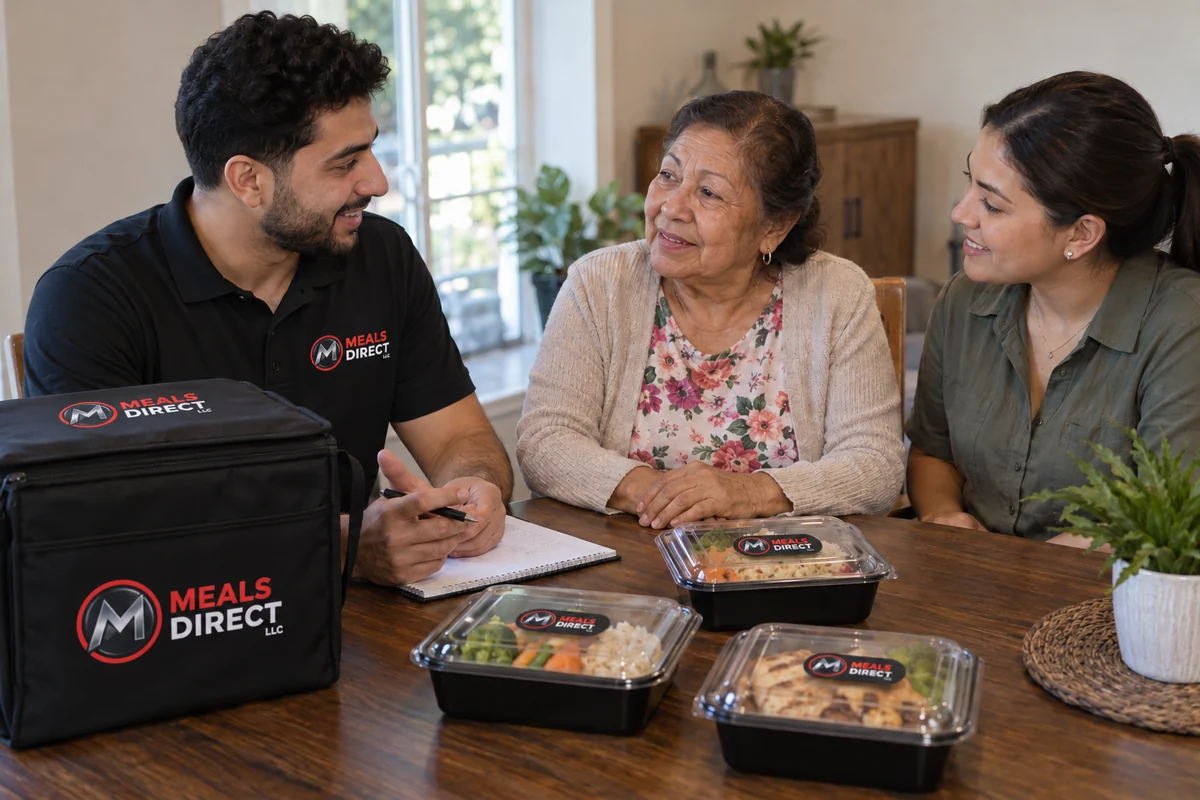
If you need language help for home-delivered meals, the first step is simple: say which language you prefer at the start of the conversation, then ask which language support is currently available for your state. Support can differ by state and program, so asking is the only reliable way to know what exists for you. This post explains how to state a language preference, what to ask about materials, how to bring someone to help and which contact route to use.
How to state a language preference
You can tell the team your preferred language in the way that is easiest for you:
- At the start of a call, say the name of the language you prefer, even if you say it in English.
- In an email, write your preferred language in the message. Our Request a call page lists our email address.
- Through your service coordinator or case manager, who can note your preference when they contact a provider.
- Through a family member or friend, who can call with you and explain your preference, with your permission.
Ask whether the team can record your preferred language and how that preference will be used on later calls. Repeat it when needed rather than assuming it has carried over.
Language help for home-delivered meals: what to ask about
Language support and translated materials can differ by state, program and team. We do not promise any specific language in this post. Instead, here are good questions to ask:
- Which language support is currently available for my state?
- Are any materials translated, such as menus or information sheets?
- Can an interpreter join a call, or can a family member help?
- Will my language preference be noted for future calls and deliveries?

Bringing someone to help
Many people feel more comfortable with someone they trust on the call. That can be:
- A family member or friend
- A caregiver
- An interpreter
- The member's service coordinator or case manager
With the member's permission, a helper can explain needs, ask questions and write down the answers. Programs have rules about who can share information on someone's behalf, so ask what applies in your state.
The right contact route
Use the official contact path for the state where the member lives:
- Start with our locations page and choose the member's state.
- Use the contact details on that state's page. Our Request a call page has a callback form and lists our phone and email.
- Say your preferred language at the start, and ask what support is available.
Please keep health details, ID numbers and case information out of social media comments and messages, in any language. Social media is not a secure channel. Use the phone, the callback form or email instead.

Why it matters
When information comes in a language a person understands well, it is easier to ask questions, make choices about meals and know what happens next. Saying your preference up front helps the team support you as well as they can with the resources available in your state.
A simple way to ask for help
You can prepare a short sentence: "I prefer to discuss meal information in my language. Which language support is currently available, and how do I arrange it?" You can write the name of the language on your own note before calling.
If the first person you reach cannot answer, ask who can confirm the available options. For a translated menu, ask whether it reflects the same current choices as the version the team is using. Options vary by area and program. If someone helps interpret, pause between questions and repeat the next step in your own words. Ask about anything that is unclear before agreeing to a form or request.
